
 When we took over the site in 2012, the most common trees by far were Corsican pines. Records show that 28,000 were planted when the site ceased to be a quarry in the 1970s. This was almost certainly done to stabilise the ground, and possibly in the hope of producing a commercial crop.
The trees have grown tall, but they were planted close together and were not thinned when they were young. This means they are not particularly strong, and they provide poor conditions for biodiversity. Because they are so closely packed and have dense foliage, they prevent light and rain reaching the woodland floor, meaning that very little can grow beneath them.
It was clear that, to fulfil our aims of improving biodiversity, we needed to remove many of them. Simply cutting them all down was not an option, as this would leave the exposed soil vulnerable to erosion, so we have followed woodland management plans drawn up by experts.
With a licence from Natural Resources Wales (NRW), we have completed three selective felling programmes, each of which included some clear-felled areas, as well as the removal of about one in four of the remaining trees. This has allowed light and rain into the woodland, and the change has been dramatic. It is amazing how many seeds can lie dormant for many years, yet still flourish when given the opportunity.
We now have large numbers of oak, ash, sycamore and holly appearing, and, of course, plenty of silver birch, all of which have self-seeded. These are in addition to several hundred saplings across the site that we have planted. Interestingly, the areas we have left to regenerate naturally have generally flourished more quickly and productively than those where we planted saplings — a lesson for future management.
We will wait to see what advice we receive regarding future felling, but even if we undertake more thinning, it is unlikely there will be any more clear-felled areas.
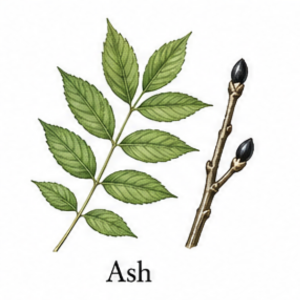
Recognise by: A tree reaching up to 35m tall; leaves are arranged in opposite pairs, usually with 3–6 pairs of leaflets and a single terminal leaflet at the tip. The leaves turn towards sunlight and are unusual in that they often fall while still green. In winter, ash is easily recognised by its distinctive black buds and flattened twigs. The bark is pale brown to grey and becomes deeply fissured as the tree matures.
Like most woodlands in the United Kingdom and across Europe, ash trees in Maes y Pant have suffered from ash dieback, caused by the fungus Hymenoscyphus fraxineus. It was first confirmed in the UK in 2012 and has spread very quickly. The fungus produces spores that can be carried for tens of miles on the wind, causing blackened leaves, dead branches and sometimes the collapse of mature trees.
It is anticipated that up to 80% of native ash trees may ultimately be affected, potentially costing the British economy £15 billion. It will certainly change the landscape and be devastating for many species that rely on ash.
The good news is that between 1% and 5% of ash trees appear to have some natural resistance. It is hoped that by allowing these trees to flourish, the resilience of our woodlands can be improved.
We are following NRW advice in our management of affected trees and ask all visitors to support biodiversity by cleaning shoes and bicycle wheels after visiting the woodland, and by avoiding the removal of cuttings or plant material.
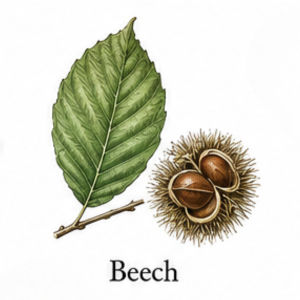
Recognise by: A tree growing up to 40m tall, with a huge, dense, domed crown. The bark is smooth and grey, often with slight horizontal markings. Young leaves have fine hairs and are lime green, becoming darker as they mature. They are oval with a pointed tip and gently wavy edge. Some leaves, particularly on younger trees, are often retained through winter and fall in spring.
Beech is often known as the “queen of British trees” and supports a wide variety of wildlife, including many insects and butterflies. The seeds, known as beech mast, are an important food source for birds and mammals.
There are not many beech trees in Maes y Pant, but we have planted some to form the hedges around the car park.
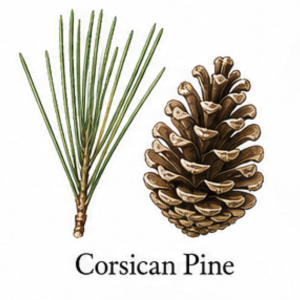
Recognise by: An evergreen conifer reaching around 24m in height in the UK; long needles grouped in pairs; dark grey-brown bark that becomes flaky with age; and large, shiny cones that are often noticeably one-sided. It is also known as the black pine.
Corsican pine is not especially valuable for biodiversity compared with native broadleaf trees, but it does provide shelter for small mammals and birds, particularly goldcrests and coal tits.
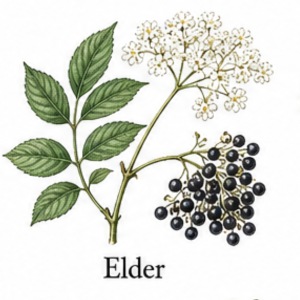
Recognise by: A small tree or large shrub growing up to 15m tall, with grey-brown corky bark. The leaves usually have 5–7 pairs of leaflets with finely toothed edges. It is easily recognised by its large, flat 'umbrellas' of creamy-white flowers in late spring and its bunches of purple-black berries in autumn.
The flowers are traditionally used to make elderflower cordial, while the berries can be used to make cordial, jelly and wine. Elderberries have also been used in herbal traditions, and folklore suggests that planting an elder near your home would protect it from evil spirits.
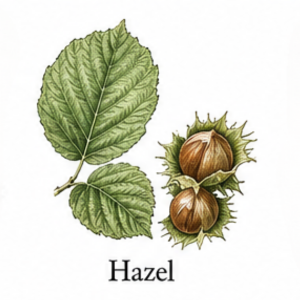
Recognise by: A small tree or large shrub growing up to 12m tall, with rounded, oval leaves that are soft and hairy. The bark is smooth and grey-brown and peels with age. Male flowers appear as long yellow catkins in late winter and early spring, while the familiar hazelnuts develop in autumn.
Hazelnuts are an important food source for wildlife, including squirrels and dormice, as well as being loved by humans!
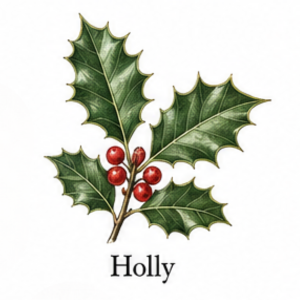
Recognise by: An evergreen tree or shrub growing up to 15m tall, with distinctive dark green, shiny leaves that usually have spiny edges, although older leaves and those higher in the tree may be smooth. The bark is smooth and thin, with many small brown bumps. Male and female flowers usually grow on separate trees, and only female trees produce the familiar bright red berries after pollination.
Holly has long been used for Christmas decorations, and its pale, hard wood has traditionally been used for furniture, inlay work and walking sticks. The berries are an important source of food for birds in winter, and the seeds are spread in their droppings, allowing new trees to establish.
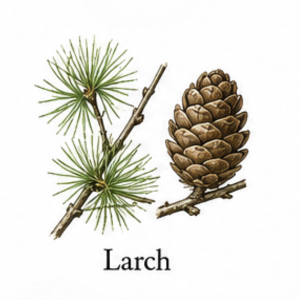
Recognise by: A deciduous conifer growing up to 30m tall. Fresh bright green needles appear in spring in clusters resembling small rosettes, giving larch its reputation as a “springtime show-off”. The bark is pinkish-brown and develops broad cracks as the tree ages.
During the third phase of felling in early 2023, contractors thinned the stand of larch in the area between Maes y Pant and Marford Quarry. This followed expert advice to increase air circulation around the trees and reduce the risk of infection by the fungus-like organism Phytophthora ramorum.
This disease can kill trees — its name literally means “plant destroyer”. There is currently no sign of it in Maes y Pant, but it has been found in other nearby woodlands. If infected trees are discovered, it is a legal requirement that they are felled and destroyed on site, which would be a significant loss both to biodiversity and to the beauty of the woodland.
As a deciduous conifer, larch provides one of the woodland’s most striking seasonal displays, with its vivid green spring growth and golden autumn colour.
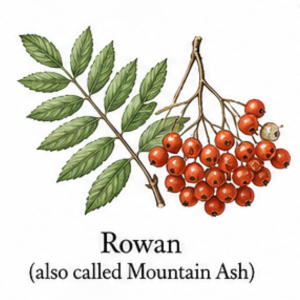
Recognise by: A small tree growing up to 15m tall, with smooth silvery-grey bark. The leaves are made up of 5–8 pairs of leaflets and a single terminal leaflet at the tip. Rowan produces clusters of white flowers in spring and is easily recognised in autumn by its bunches of bright orange-red berries.
Despite its alternative name, mountain ash is not closely related to the true ash tree. The berries provide an important food source for many birds, particularly thrushes, which help spread the seeds.
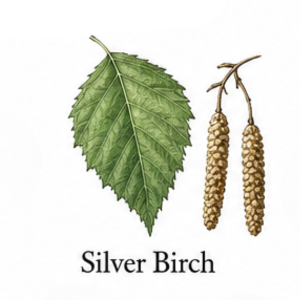
Recognise by: A graceful tree growing up to 30m tall, with slender, drooping branches and distinctive white bark that peels in thin, papery strips. The leaves are light green, triangular and have a finely toothed edge. Male catkins develop in spring and release pollen between April and May.
Silver birch is known as a pioneer species because it can grow in a wide range of habitats, including poor and disturbed soils. It is often one of the first trees to establish itself in new woodland, and many of the silver birches in Maes y Pant have self-seeded.
Where conditions are favourable — as they clearly are in Maes y Pant — silver birch can spread rapidly. In mixed woodland, it can act as a “nurse tree”, sheltering younger and more delicate species while they become established.
It is also highly valuable for wildlife, with over 300 species of insects known to use silver birch for food and shelter.
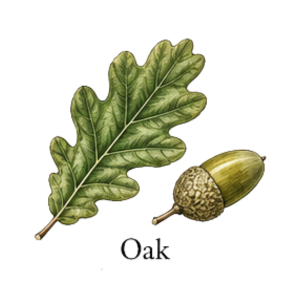
Maes y Pant has both English oak (Quercus robur) and sessile oak (Quercus petraea).
Recognise by: A large tree growing between 20m and 40m tall, with distinctive leaves around 10cm long, usually with 4–5 deep rounded lobes. Male catkins appear in spring and develop into acorns in autumn. English oak leaves have very short stalks, but their acorns grow on long stalks. Sessile oak leaves have longer stalks, but their acorns sit directly on the twigs.
Often known as the “king of trees”, the oak is widely regarded as the national tree of Britain and is one of our most important species for biodiversity. It is estimated that oaks support more than 2,300 species of wildlife, more than any other tree in the UK.
The oak family also includes evergreen species, although all native British oaks are deciduous. Oak timber is exceptionally strong and has been used for thousands of years in furniture, flooring, shipbuilding and construction. Oak bark has also been used in the tanning of leather for more than 8,000 years.
One fascinating member of the oak family is the cork oak (Quercus suber), which is not native to Britain. Its thick bark can be carefully harvested without harming the tree, with each tree typically harvested by hand about once every nine years. Portugal’s cork oak forests contain around one-third of the world’s cork oaks and produce millions of corks every day.
Amazingly, many oak trees in the UK may have been planted by jays and squirrels. Jays feed on acorns but also create hidden stores, known as caches, to return to later. They can carry acorns over considerable distances — often hundreds of metres away from the parent tree. One study of 65 jays found that they buried up to half a million acorns in a single season. It is estimated that around 25% of these hidden acorns are never recovered, allowing them to germinate and grow.
A famous study in Oxfordshire looked at two agricultural fields that were abandoned and left to regenerate naturally. Thrushes first spread the seeds of bramble, blackthorn and hawthorn, creating thorny scrub that protected young oak seedlings growing from acorns buried by jays. After 59 years, one field had developed into mature woodland with around 390 trees per hectare, 52% of which were oaks. The second field, abandoned 35 years later, was studied after 24 years and had developed into young woodland with around 132 trees per hectare, of which 57% were oaks.
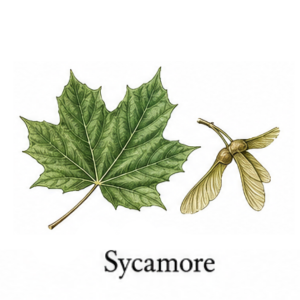
Recognise by: A large tree growing up to 35m tall, with a broad domed crown. The leaves have five pointed lobes with toothed edges and long red or pinkish stalks. Small green flowers hang in clusters and develop into winged fruits called samaras, better known to generations of children as “helicopters”.
Sycamore is not native to the UK; it was introduced around the 15th or 16th century. Its ability to grow in a wide range of soils, including disturbed ground and former industrial sites, means it can spread rapidly and is sometimes regarded as invasive.
However, it is also a valuable wildlife tree, providing food and shelter for many insects, birds and mammals. Sycamore wood is traditionally used for making Welsh lovespoons.
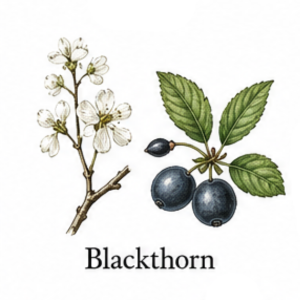
Recognise by: A dense, thorny shrub growing up to 6–7m high, with dark bark and long sharp spines. The leaves are oval and finely toothed. It is one of the earliest shrubs to flower, producing a profusion of white blossom in early spring before the leaves appear. The small round blue-black fruits are called sloes and are traditionally used to make sloe gin. If you are picking sloes, take care — blackthorn spines can cause painful wounds and may break off under the skin.
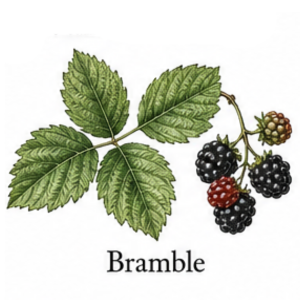
Recognise by: A scrambling shrub that can grow up to 2m high, with long arching prickly stems. The leaves are dark green above and paler underneath. Clusters of white or pale pink flowers appear from late spring into summer, and the fruits (blackberries) ripen from green through red to deep purple-black from late July to September. Bramble is one of the most valuable plants for wildlife, providing nectar for insects, fruit for birds and mammals, and dense shelter for many species.
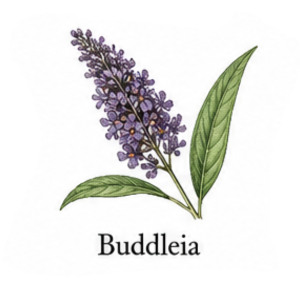
Recognise by: A woody shrub with long grey-green pointed leaves and large drooping spikes (panicles) of densely clustered flowers, usually purple but sometimes white. It can grow up to 5m high and may occur as a single plant or form dense thickets in suitable conditions.
Buddleia was introduced to the UK from China in the late 19th century as a garden plant. It has since become naturalised and thrives on disturbed ground, including cracks in walls and rubble. It became especially common on bomb sites after the Second World War.
Its vigorous growth means it can damage buildings and structures, and it is therefore often considered an invasive species. However, it is highly attractive to butterflies and moths and is often known as the “butterfly bush”.
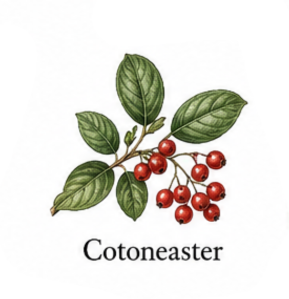
Recognise by: A deciduous or evergreen shrub (depending on the species) with small, simple, often glossy leaves; white or pink flowers in late spring; and abundant red berries in autumn.
Many species of cotoneaster were introduced to the UK as garden plants in the 19th century, but some escaped cultivation and became invasive. The berries are popular with birds, which then disperse the seeds in their droppings.
One native species, Cotoneaster cambricus (the Great Orme berry), is found only on the Great Orme near Llandudno and is one of Britain’s most endangered plants.
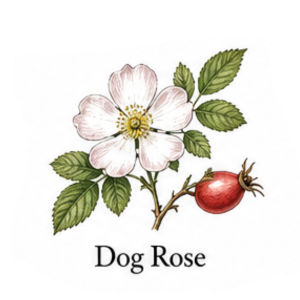
Recognise by: A scrambling, thorny shrub and the most common of Britain’s wild roses. It produces pink or white flowers with five petals during June and July, followed by bright red rosehips in autumn.
The rosehips are an important food source for birds and mammals and have traditionally been used to make syrups, teas and jellies.
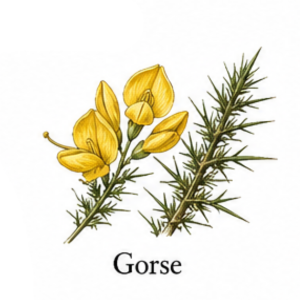
Recognise by: A dense evergreen shrub with sharp, spine-like shoots that can reach up to 4cm long. It produces bright yellow flowers with a distinctive coconut-like scent.
Gorse flowers most abundantly in spring and summer, but it can bloom during most months of the year. This gave rise to the old saying, “When gorse is out of blossom, kissing is out of fashion” — meaning there is always gorse in flower.
Gorse is easily confused with broom, which can also be found in Maes y Pant. Broom has slightly paler yellow flowers and, unlike gorse, does not have sharp spines.
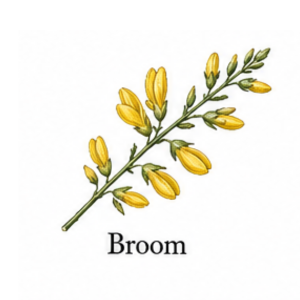
Broom
Recognise by: A bushy shrub growing up to 3m high, with slender green stems and small leaves. It produces masses of bright yellow, pea-like flowers in late spring and early summer. Although often confused with gorse, broom does not have sharp spines and its flowers are usually a slightly paler yellow.
Broom is a member of the pea family and, like many plants in this group, it can improve poor soils by fixing nitrogen from the air through bacteria associated with its roots. It thrives on dry, open ground and was one of the first plants to colonise former quarry sites such as Maes y Pant.
Its flowers are a valuable source of nectar for bees and other pollinating insects, and the dense branches provide shelter for small birds and mammals.
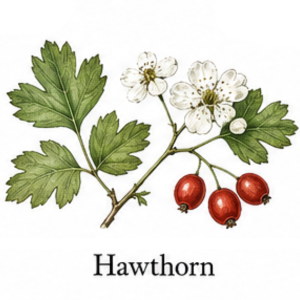
Recognise by: A small tree or large shrub that may grow up to 15m high, though it is more commonly found as a dense, thorny hedge. The bark is grey-brown and often deeply fissured with age. The leaves are deeply lobed and fresh bright green in spring. It produces masses of white or pale pink blossom in May and red berries, known as haws, in autumn.
Hawthorn is one of the most important plants for wildlife, supporting hundreds of insect species and providing food and shelter for birds and mammals.
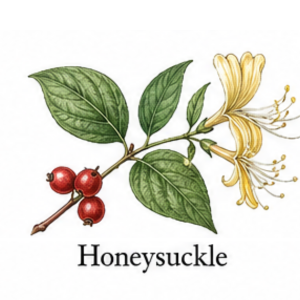
Recognise by: A woody climbing plant that twists around trees and shrubs. Its highly scented flowers, especially noticeable in the evening, are usually creamy white and yellow and are followed by bright red berries in autumn. The grey-green oval leaves may remain on the plant through mild winters.
Honeysuckle is particularly valuable to moths, including hawk moths with their long tongues, which can reach deep into the tubular flowers to drink the nectar.